
How I work

A clear process, the right tools, and judgment where it counts.

From first conversation to something live in the wild — embedded in the team, working through ambiguity alongside engineers and stakeholders. AI accelerates the parts that should be fast, never the parts that require judgment.
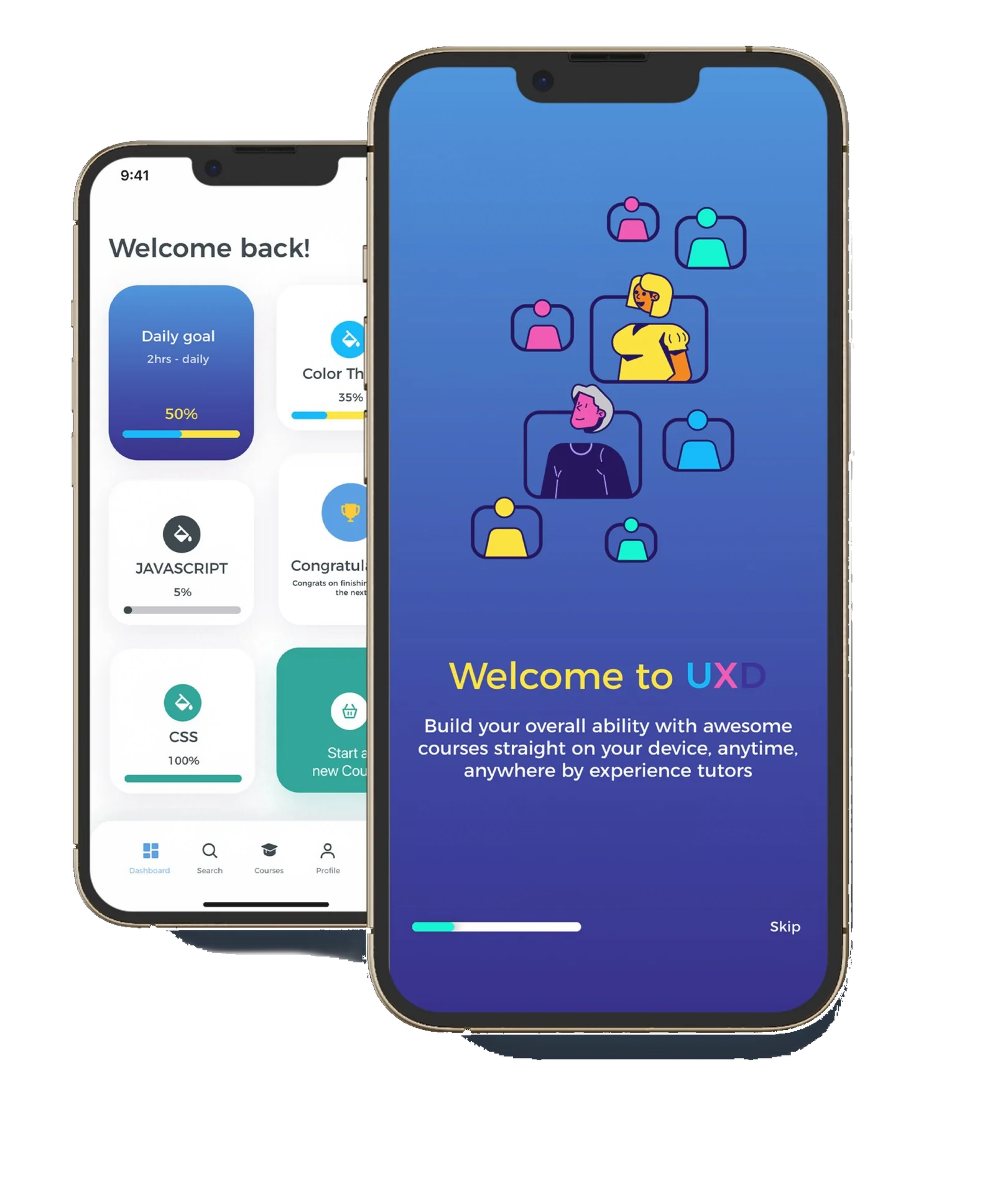
UXD — product design work

Two frameworks, in sequence.

I run two methodologies back to back. Double Diamond is the discipline of finding the right problem before building anything — diverge to explore, converge to decide, twice. But a validated concept that never ships is worth nothing. So once the problem is clear, I switch to the Snowball Sprint: short cycles that ship, prove, and compound value before skepticism sets in. They don't compete — they operate at different altitudes, and they're strongest run in sequence.

Discover Define Develop Deliver Diverge → Converge Diverge → Converge DOUBLE DIAMOND · problem S1 S2 S3 Each sprint informed by the last SNOWBALL SPRINT · momentum

Use Double Diamond once to find the right beachhead. Then Snowball Sprint to own it. Skip the Diamond and you ship a flawless solution to the wrong problem; skip the Sprint and the validated concept never leaves the page.

Double Diamond

Are we solving the right problem?

Problem-centric. Most teams jump to solutions before understanding the problem deeply enough. The discipline is slowing down to look wider before narrowing.

About being right.

Snowball Sprint

Are we shipping and compounding value?

Momentum-centric. Most AI programs die not from bad ideas but from stalled execution and eroding trust. The discipline is speeding up the proof cycle before skepticism sets in.

About staying alive long enough to get better.

Double Diamond Snowball Sprint
Starting point Ambiguous problem space Known pain point
Orientation Diverge then converge Converge immediately, iterate outward
Time horizon One arc — weeks to months Repeated short cycles — 1–2 weeks each
Output A validated solution concept A shipped, measured increment
Risk managed Solving the wrong problem Over-scoping, stalling, losing trust
Failure mode Skipping discovery, building on assumptions Sprawl, non-adjacency, no measurement

Where they agree

Assumptions are dangerous

The Diamond surfaces them through research; the Sprint surfaces them through shipping. Either way, they get tested.

Iteration beats perfection

Neither bets everything on a single big-bang waterfall delivery. Both improve through repeated, deliberate passes.

Humans drive the decisions

Both keep a human in the loop at the key inflection points. AI accelerates the work — it never makes the call.

When to lead with which

Lead with the Diamond

  • The problem space is genuinely unclear
  • Stakeholders disagree on the real problem
  • You're entering a new domain or user group
  • Failure would be costly and hard to reverse

Lead with the Sprint

  • The pain point is already well understood
  • Trust in AI is low and needs building
  • A tight budget has to justify itself fast
  • Shipping teaches you more than researching

Use both

  • You're building a serious, long-term AI program from scratch
  • Diamond to find the right beachhead
  • Sprint to execute and compound
  • Own it, then keep getting better

What I bring to the table

Thirty years in digital, the last decade focused on product design leadership across fintech, SaaS and regulated environments — from discovery and research through to shipped, production-ready products.

Leadership & People

How I build and lead design teams — establishing the culture, process and operating model that lets designers do their best work.

Experience

  • 20+ years leading product design
  • 3 UX functions built from zero
  • C-suite design advocacy
  • Enterprise and startup environments
  • Contract and embedded leadership

Approach

  • Design direction and quality ownership
  • Hiring and capability building
  • Mentoring senior and mid-level designers
  • Design ops and process improvement
  • Embedding design across non-design teams
Strategy & Product

How I connect design decisions to business outcomes — from shaping roadmaps and defining success through to facilitating discovery and keeping scope honest.

  • Outcome-focused roadmap thinking
  • Jobs-to-be-done and problem framing
  • Research synthesis and insight to action
  • OKR alignment and success metrics
  • Design maturity assessment
  • Discovery facilitation and workshops
  • Requirements definition and prioritisation
  • MVP scoping and phased delivery
  • Commercially aware decision making
  • Design advocacy at leadership level
Domain Expertise

The sectors and product types I know deeply enough that domain expertise replaces research time — I understand the constraints before the brief lands.

  • Fintech and specialist lending
  • B2B SaaS and regulated platforms
  • Mortgage and affordability platforms
  • CRM and pipeline tooling
  • Enterprise design systems at scale
  • AI-native and conversational UX
  • Analytics and data visualisation
  • Security and threat management
  • Healthcare and compliance-led environments
  • Multi-tenant SaaS and white-label products
Design Delivery

How I close the gap between what's designed and what ships — using AI-assisted pipelines that take Figma layouts to production components without fidelity loss.

Qualifications

  • PMI Project Management
  • PMI Agile Foundation / Practitioner
  • PMI Product Owner
  • PMI Product Manager
  • SAFe Agile Certification

Process

  • Figma to React via Claude MCP
  • Component generation with Claude Code
  • Claude Design for brand token extraction
  • Figma layouts to production without fidelity loss
  • One source of truth from Figma to shipped
Delivery Practice

How I work inside product and engineering teams — from sprint planning and backlog refinement through to stakeholder reviews and regulated release cycles.

  • Sprint planning and backlog refinement
  • Cross-functional squad working
  • Agile and SAFe delivery frameworks
  • Azure DevOps · Jira · Linear
  • Stakeholder reviews and demo facilitation
  • Requirements definition and scoping
  • Acceptance criteria and story writing
  • Design within regulated release cycles
  • Risk and dependency management
  • Continuous delivery and deployment
Tools & Infrastructure

The full stack I use to design, build and ship — from component libraries and design systems through to deployment pipelines and production environments.

  • GitHub · Vercel · Netlify
  • Notion · Confluence
  • Figma · Storybook
  • Claude Code · Cursor
  • PostgreSQL · Node.js
  • React · Next.js · TypeScript
  • Tailwind CSS · shadcn/ui
  • Azure DevOps pipelines
  • CI/CD and production deployment
  • Environment management across staging and live
Design

From early wireframes to polished, production-ready components. The tools I use to design, prototype and build at every fidelity.

  • Figma
  • Claude Design
  • Figma AI
  • Figma Make
  • Adobe Creative Suite
  • React
  • Vite
  • Next.js
  • Tailwind CSS
  • Claude Code
  • Cursor
  • v0 (Vercel)
Product Design & Design Systems

Product design leadership across fintech, SaaS and regulated environments — from discovery through to shipped.

  • Interaction design for complex workflows
  • Journey mapping and experience design
  • Information architecture
  • Service flow and experience mapping
  • Design systems and component libraries
  • Design system governance
  • Cross-platform product design
  • Web, SaaS and mobile product experience
AI-Enabled Product Design

Designing AI-enabled products where the model is a first-class part of the experience.

  • Conversational UX design
  • Agent-based interaction models
  • Human-in-the-loop design
  • AI in regulated environments
  • AI-assisted discovery workflows
  • AI-assisted design and delivery
  • LLM capabilities in product experiences
  • AI-native interface patterns
These skills shape the products I ship. See what I design. What I design →